
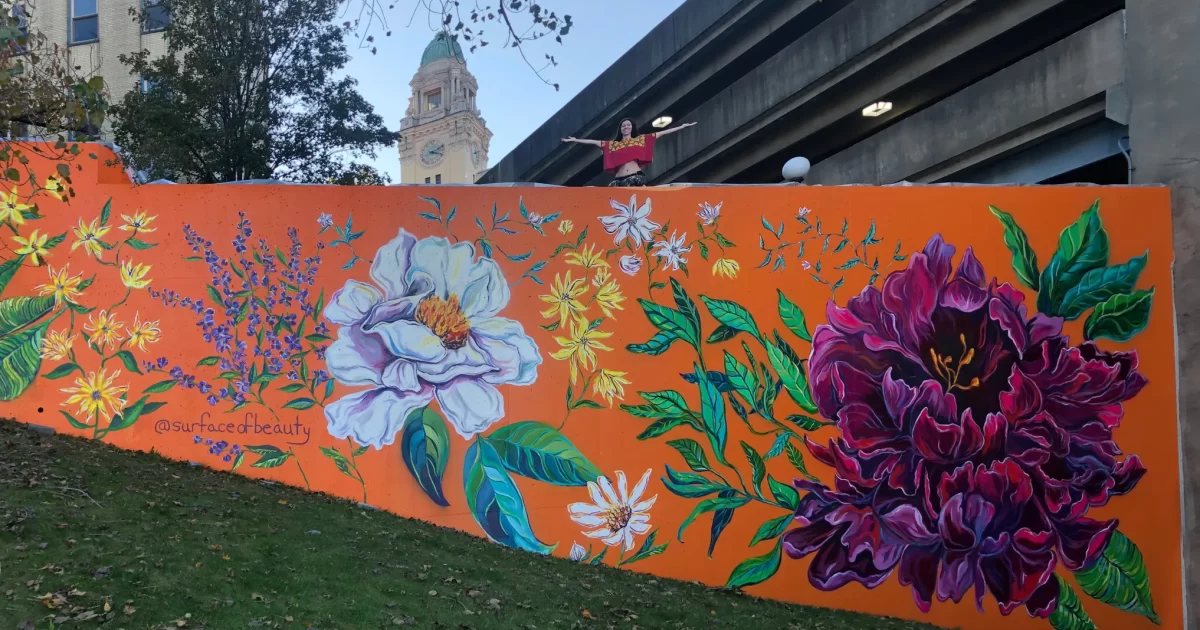
Cities are often seen as places of rush, noise, and endless movement. Between the tall buildings and busy streets, it’s easy to forget what calm feels like. But sometimes, amid the grey walls and dusty corners, a flower blooms; not from the soil, but from paint.
That’s the quiet power of floral murals. They don’t just decorate walls; they heal them. They don’t just add color; they add meaning. Each petal painted on a wall becomes a soft reminder that beauty, hope, and life can exist even in the hardest concrete spaces.
When Art Blooms in Concrete
Urban life can often feel disconnected from nature. Our mornings begin with alarms instead of bird songs, and our eyes meet screens more than skies. In this constant race, floral murals act as small pauses, moments where we can stop, breathe, and feel.
Artists across the world have begun turning dull city walls into blooming gardens. A once-forgotten lane becomes vibrant with painted roses and wildflowers. A school boundary wall turns into a meadow of tulips. Even an underpass, known for its shadows, can suddenly feel alive with bright petals.
These artworks do more than beautify—they transform moods. A wall filled with marigolds or lilies can make a passerby smile. A field of painted daisies can make a child stop and stare in wonder. In their silence, flowers speak directly to the heart.
The Psychology of Flowers in Art
Why do floral murals move us so deeply? The answer lies in what flowers represent. Across cultures and centuries, flowers have symbolised hope, renewal, and emotional connection.
A lotus might represent purity in India, while a rose might mean love or remembrance in another land. But beyond meaning, colors themselves have emotional impact. Yellow brings warmth, pink calms, blue soothes, and green restores balance.
When these colors appear together on a city wall, they don’t just change the scenery—they change how people feel. Studies in urban psychology show that colorful public art can reduce stress, promote relaxation, and even make neighborhoods feel safer and friendlier.
So, when an artist paints petals on an old building, they are not just creating art—they are creating emotional medicine.
Floral Murals as Urban Therapy
Cities often carry scars, peeling paint, pollution, and neglect. Murals, especially floral ones, work like gentle bandages. They don’t erase the scars but turn them into stories of renewal.
Think of a cracked wall painted with vines creeping across its surface. Instead of hiding the damage, the artist embraces it; turning cracks into stems, breaks into blossoms. It’s as if nature is taking back space through art.
In many communities, floral mural projects are part of urban healing. Local volunteers, children, and residents join hands with artists to paint. The act of painting together becomes therapy in itself. Laughter, conversation, and color replace silence and decay. When the last petal is drawn, it’s not just the wall that looks better; it’s the people too.
When Flowers Become Messages
Flowers have always carried meanings, even without words. A sunflower stands tall for strength and warmth. A hibiscus speaks of delicate beauty. A poppy might whisper remembrance.
Muralists use these floral symbols to speak to people in ways that feel personal yet universal. A wall covered with lotuses beside a polluted lake might remind viewers of purity lost and purity possible. A mural of blooming cherry blossoms can evoke the idea of fleeting time and living in the present.
In some cities, floral murals are part of social movements. Artists use flowers to talk about peace, women’s empowerment, or climate action. For example, in Mexico, large floral murals celebrate the resilience of women. In India, artists paint native flowers to honor biodiversity and tradition.
Every petal carries a voice. Together, they form a chorus of emotions—joy, hope, resistance, and renewal.
Floral Art and the Sense of Belonging
Beyond aesthetics, flower murals also help people feel more connected to their surroundings. In neighborhoods that once felt neglected, a beautiful mural often becomes a local landmark, a source of pride.
People start saying, “This is our wall.” They take photos beside it, maintain it, and show it to visitors. It becomes part of the community’s identity.
That’s the quiet magic of floral art—it roots people emotionally in a place. It gives them a reason to care about their streets again. In a time when many city dwellers feel isolated, such shared spaces create a subtle sense of togetherness.
From Petals to Purpose: Global Examples
Around the world, floral murals have become symbols of renewal, hope, and empathy. In the United States, cities are embracing this trend with remarkable creativity. In Los Angeles, giant roses, sunflowers, and daisies cover old buildings, spreading messages of peace and community.
New York City has transformed alleyways and blank walls into urban gardens with colorful blooms, making neighborhoods feel more alive. In Chicago, murals of native flowers like coneflowers and black-eyed Susans celebrate local heritage while bringing vibrancy to city streets.
Even smaller cities such as Portland and Austin feature floral murals that blend art with environmental awareness, reminding residents of nature’s beauty in urban life.
Beyond the U.S., floral murals also bloom across the globe. In London, flowers cover construction barriers, turning temporary walls into visual poetry.
Tokyo welcomes cherry blossom murals each spring, echoing the city’s deep cultural connection to nature. In Mexico City, walls burst with painted marigolds during festivals, symbolizing remembrance and resilience.
These global examples show that whether in the United States or abroad, flowers on walls can transform the way people see their cities—and themselves.
The Healing Power of Color and Form
Floral murals are more than decoration—they are emotional landscapes. When someone passes by a wall filled with bright petals, something inside them softens.
Art therapists often talk about the healing power of visual imagery. Seeing flowers, even painted ones, can lower anxiety and evoke a sense of comfort. The flowing shapes, soft lines, and vibrant hues remind our brains of nature’s patterns—something humans are biologically drawn to.
In a way, these murals act like open-air therapy sessions. You don’t need to enter a gallery, buy a ticket, or even understand art. You just need to look. The wall does the rest.
When Petals Become Public Poetry
Every city has its share of noise; honking, advertisements, billboards shouting for attention. Amid this chaos, a flower mural is quiet poetry. It doesn’t demand to be seen; it gently invites you to pause.
That’s the true emotional power of floral art; it restores softness in a world that often feels hard. It reminds us that beauty doesn’t always need to be grand. Sometimes, it’s painted quietly on a wall at the corner of a street, waiting for someone to notice.
Artists who create floral murals often say they do it to bring balance. A flower, after all, is a symbol of impermanence; it blooms, fades, and returns again. In that cycle lies a deep lesson about resilience and renewal, not just for nature but for humanity.
Conclusion: The Bloom Within the City
Floral murals remind us that beauty can exist anywhere; even in a cracked wall, even in a busy lane. They are more than art; they are emotional bridges between people and places.
Every brushstroke is a whisper of hope, every petal a symbol of healing. These murals teach us to see cities not just as buildings and roads, but as living, breathing spaces capable of feeling.
So, the next time you walk down a street and see a painted flower blooming on a wall, pause for a second. Let the colors sink in. Maybe you’ll realize that it’s not just the wall that’s blooming, it’s your own heart that feels a little lighter.
Because sometimes, a flower painted on a wall can do what even words cannot, it can heal.
Featured Image Courtesy: Natasha May Platt