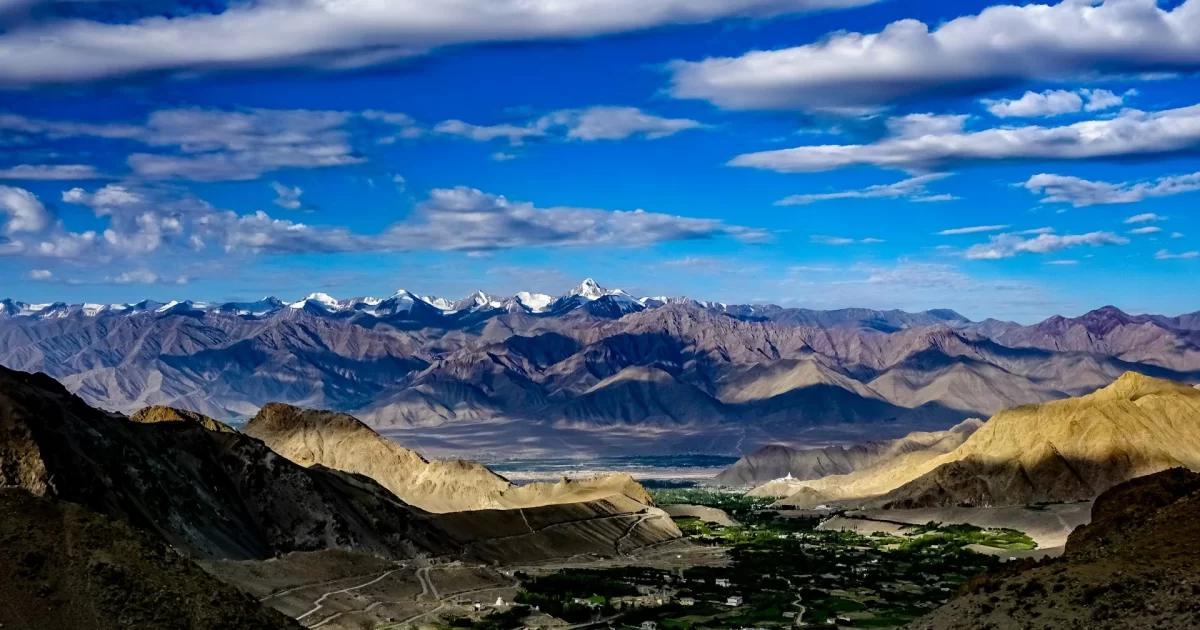
Let’s get one thing straight; reading about thin air while sitting at sea level is very different from actually trying to catch your breath at 11,000+ feet.
When I first planned my Ladakh Trip in April, I consumed every guide, packing list, and YouTube tutorial I could find. But the truth is, nothing completely prepares you for that first steep incline where the wind is howling and your lungs suddenly decide they’re working overtime just to take a single step.
I still remember the first day of our Ladakh trip. After touching down in Leh, we (me and my cousin) made our way to the hotel and were handed the keys to a room on the third floor. Just three flights of stairs—pretty easy, right?
Well, my lungs definitely didn’t think so. Halfway up those steps, hauling our gear, my friends and I were gasping like we’d just sprinted a marathon. That was our harsh, immediate introduction to thin air.
Over time, and through a fair share of trial, error, and heavy breathing on the trails, I’ve realized that high-altitude prep isn’t just about buying the most expensive wear or trekking poles—it’s a physical, mental, and logistical game.
If you’re planning to head up into the clouds soon; whether it’s Leh-Ladakh, Spiti Valley, or the high altitudes towns or passes of Uttarakhand and Himachal Pradesh; here is the realistic, no-nonsense guide on how to actually prepare, from someone who had to figure it out on the way.
The Physical Prep: Keep It Simple, Keep It Moving
When people hear “train for altitude” they immediately picture running tracks and heart rate monitors. But 10,000 steps a day is genuinely solid base conditioning. You’ve built leg endurance. Your cardiovascular system is used to sustained low-intensity effort. You’re comfortable being on your feet for hours. That stuff matters a lot more than you’d think.
You don’t need a fancy gym membership or an intense workout regime to survive high altitudes. What your cardiovascular system really needs is simply to know how to keep functioning when the oxygen drops.
-
Walk, jog, and skip the elevator: About a month before your trip, start making small, everyday changes. Squeeze a brisk walk or a light morning jog into your daily routine. Skip the elevator and make it a habit to climb the stairs at your apartment building or office. To make it even more realistic for the mountains, throw on your daily backpack with a few water bottles inside while you do your walking.
-
Stamina over strength: Altitude makes your muscles fatigue much faster, so endurance is your best friend. It’s not about lifting heavy weights; it’s about training your legs and lungs through consistent, simple movement so they know how to just keep a steady rhythm when they are tired.
What you do want to add — and this is where regular walkers can easily level up — is hills. If you’re walking 10k steps on flat roads, start finding slopes. Staircases, elevated parks, anything with an incline. The altitude challenge isn’t about speed, it’s about sustained effort going uphill with a pack. Your legs need to know that feeling before you’re on an actual mountain.
The altitude tiredness is not the same as regular tiredness
This is the thing nobody explains properly. When you’re tired from a long walk, you rest for twenty minutes and you’re mostly fine. High altitude tiredness doesn’t work like that. It sits behind your eyes. It makes simple things feel slightly foggy. You might sleep eight hours and still wake up feeling like you didn’t.
That’s your body working overtime — producing more red blood cells, adjusting your blood chemistry, learning to extract oxygen from thinner air. It’s not a fitness problem, it’s a biology problem.
And the only solution is time. Two, three days at moderate altitude before pushing higher makes an enormous difference.
Actually, those hill station trips you’ve already done?
They count. Your body has had exposure to moderate altitude before. That’s called prior acclimatization and it genuinely gives you a slight head start compared to someone going straight from sea level to 3,500 metres.
Slow down before you think you need to
This is the one I had to learn from experience. At sea level, I walk at a decent fast pace, comfortable, can chat, no big deal. At altitude, that same pace becomes unsustainable within twenty minutes. And the instinct; especially when you’re solo — is to push through it.
Don’t.
Genuinely, just slow down. The pace that feels almost embarrassingly slow at altitude is often the exact right pace. Your breathing should stay controlled. If you’re gasping, you’re going too fast.
I learned this the hard way on my first solo Kheerganga trek. I kept a steady, comfortable pace the whole way — and yes, it’s a little deflating when other trekkers zoom past you like you’re standing still. But here’s the thing: everyone has their own pace, and that’s completely okay.
P.S. I reached the top around the same time as most of them. Found a bunch of them bent over, gasping for breath just a few minutes from the destination. Slow and steady, as it turns out, is not just a fable.
To make sure your pace is right, just do a simple test, i.e. you should be able to say a full sentence out loud without stopping to breathe in the middle. If you can’t, slow down. Works better than any gadget.
Water. Seriously, just drink more water.
I know everyone says this and it sounds boring but altitude dehydration is sneaky. The air is dry, you’re breathing faster, and you don’t always feel as thirsty as you should. By the time your head starts aching, you’re already behind on fluids.
I started carrying a 1.5 litre bottle and finishing it before lunch, then refilling from the restaurant.
Herbal tea in the evenings if available and carry fruits.
Carry electrolyte sachets if you can. They make your hydration more efficient, especially if you’re sweating on the trail and just replacing with plain water.
Art of Layering (And Protecting Your Tech)
Up in the mountains, the weather apps lie. A brilliantly sunny morning can turn into a freezing whiteout in twenty minutes. You don’t need a massive, bulky jacket; you need a smart layering system.
-
The Three-Layer Rule: A moisture-wicking base layer to keep sweat off your skin, an insulating middle layer (like fleece), and a solid windproof/waterproof outer shell. The wind at high altitudes cuts deep, and blocking it is half the battle won.
-
The Content Creator’s Dilemma: If you are shooting photos or reels up there, remember that the freezing cold absolutely devours battery life. Keep your spare DSLR batteries and your phone tucked inside your inner jacket pockets, right against your body heat. There is nothing worse than reaching a stunning viewpoint and finding out your camera is dead.
You’re closer to ready than you think
If your current lifestyle looks like mine, decent daily walking, occasional hill station trips, no formal training, you’re not starting from zero. The gap between where you are and where you need to be is mostly about specificity, not fitness level.
And here’s something worth knowing before you even start preparing: altitude sickness doesn’t care how you got there. Whether you walked up a trail, rode a bike on the mountain roads, drove up by car, or stepped off a flight straight into Leh, your body is dealing with the same thinner air either way.
That said, how you arrive does matter a little. Road trips through places like Manali to Leh give your body a gradual climb over a day or two, which is gentler than flying directly into a high-altitude airport and hitting 3,500 metres before your luggage even arrives. If you have the option, the slower the ascent the better.
Add some incline to your walks. Practice moving slowly and breathing deeply. Drink more water than seems necessary. Get to your destination with a buffer day before the real climbing starts. And trust that your body knows how to adapt. It just needs a little time.
That exhausted feeling on day one of Ladakh? By day four, I was walking by Tso Moriri feeling almost normal. The acclimatization happened, apart from the wind. It always does.
Featured Image Courtesy Madhushree Narayan on Unsplash